

Becoming an Airbnb host in the UK means renting out property on a short-term basis through platforms like Airbnb. You can host occasionally in a spare room, rent your entire home while away, or run a dedicated holiday let as a business.
The UK short-term rental market attracts millions of guests annually seeking alternatives to hotels. Hosts range from people renting spare rooms occasionally to professional operators managing multiple properties. Understanding regulations, preparing your property properly, and maintaining high standards determines hosting success.
What an Airbnb Host Does
An Airbnb host provides short-term accommodation to guests booking through Airbnb or similar platforms. Hosting takes several forms depending on your property and availability.
Spare room hosting involves renting a bedroom in your primary residence while you continue living there. Guests typically access shared spaces like bathrooms, kitchens, and living areas. This suits homeowners with extra space wanting supplemental income.
Entire home hosting means guests have exclusive access to your property during their stay. You vacate the property completely. Many hosts use this option when traveling, allowing properties to generate income during absence.
Dedicated holiday let hosting operates properties specifically for short-term rental without personal use. This represents a business operation rather than occasional hosting. Properties remain available for booking year-round except during maintenance periods.
Investment property hosting involves purchasing properties specifically for Airbnb rental. Hosts never occupy these properties personally and treat them as business assets generating rental income.
Each hosting type carries different regulatory requirements, tax implications, and management demands. Your choice depends on property availability, time commitment, and income goals.
UK Airbnb Regulations
UK Airbnb regulations vary by nation and local authority. Compliance with all applicable rules protects you from fines and legal issues.
England Regulations
The 90-night rule applies across Greater London. You cannot use your primary residence for short-term letting more than 90 nights per calendar year without planning permission. This applies to entire home lettings only – spare room hosting faces no night limit.
Track nights carefully yourself. Airbnb doesn’t automatically stop bookings at 90 nights. Exceeding the limit without planning permission risks enforcement action and fines from your local council.
Planning permission for unlimited short-term letting requires application to your local planning authority. Applications cost several hundred pounds and take 8-12 weeks minimum for decision. Many applications get rejected in areas with housing concerns.
Registration schemes are rolling out across England. The UK government introduced mandatory registration for short-term lets. Check your local council website for specific registration requirements and deadlines in your area.
Council tax vs business rates depends on usage. Properties used occasionally for short-term letting remain on council tax. Properties available for short-term letting most of the year may switch to business rates assessment. Business rates often cost more than council tax but include small business rate relief in some cases.
Scotland Regulations
Mandatory licensing applies to all short-term lets in Scotland since October 2022. Every host must obtain a licence from their local licensing authority before accepting bookings.
Licence applications require:
- Proof of appropriate insurance
- Gas safety certificates (if applicable)
- Electrical safety certificates
- Evidence of fire safety measures
- Floor plans showing room layouts and fire escape routes
Licences cost several hundred pounds and require renewal every three years. Operating without a licence when required is a criminal offence carrying fines up to £2,500.
Planning permission may be required separately from licensing. Check with your local planning authority whether your proposed short-term letting requires planning consent.
Wales Regulations
Licensing schemes are being introduced in Wales. Local authorities gained power to implement mandatory licensing for short-term accommodation. Check your local council’s requirements.
Planning permission requirements vary by local authority. Some areas require change of use planning permission for short-term letting of entire properties.
Tourism tax legislation allows Welsh councils to introduce visitor levies. This may affect your hosting in future if your council implements the tax.
Northern Ireland Regulations
Tourist accommodation registration with Tourism Northern Ireland is mandatory for anyone operating tourist accommodation as a business. This includes holiday lets marketed commercially.
Planning permission applies to change of use from residential to short-term holiday accommodation in most areas. Check with your local planning office.
Fire safety certificates are required for most tourist accommodation. Properties must meet specific fire safety standards and undergo inspection.
All UK Nations – Universal Requirements
Right to rent checks don’t apply to stays under 3 months, but you should verify guest identity through Airbnb’s verification system.
Data protection obligations apply when collecting and storing guest information. You must comply with UK GDPR requirements. This includes having clear privacy policies and protecting guest data.
Gas safety certificates are required annually if your property has gas appliances. Qualified Gas Safe registered engineers must complete inspections.
Electrical safety inspections should be completed every 5 years minimum. Portable appliance testing (PAT) for items like kettles, TVs, and lamps should happen annually.
Smoke and carbon monoxide alarms must be installed and tested regularly. Properties need smoke alarms on each floor and carbon monoxide alarms in any room with solid fuel burning appliances.
Getting Permission and Insurance for Airbnb Hosting
Before listing your property, obtain necessary permissions and appropriate insurance coverage.
Mortgage Permission
Residential mortgages typically prohibit commercial activity including short-term letting. Most mortgage agreements require you to live in the property as your main residence.
Contact your mortgage lender before hosting. Explain your plans and request permission. Many lenders allow occasional spare room hosting but prohibit entire home letting. Some require you to switch to a buy-to-let or consent-to-let mortgage.
Operating without mortgage permission breaches your mortgage agreement. Lenders can demand immediate full repayment if they discover unauthorized commercial use. This can force property sale.
Buy-to-let mortgages designed for long-term rentals may not permit short-term letting. Check your specific mortgage terms. Some buy-to-let lenders now offer short-term let mortgages explicitly allowing Airbnb hosting.
Landlord Permission
Rental properties require explicit landlord permission for subletting. Most tenancy agreements prohibit subletting without written landlord consent.
Subletting without permission breaches your tenancy and risks eviction. Airbnb income doesn’t protect you from eviction for unauthorized subletting.
Some landlords allow subletting with formal agreements outlining terms. Expect to share a percentage of income with landlords who permit subletting.
Rental arbitrage means renting properties specifically to sublet on Airbnb. This high-risk strategy requires explicit landlord agreement and usually formal business arrangements. Many landlords refuse rental arbitrage proposals entirely.
Freeholder and Leasehold Restrictions
Leasehold properties often contain clauses restricting or prohibiting short-term letting. Check your lease carefully. Look for clauses about:
- Commercial use restrictions
- Subletting prohibitions
- Minimum letting periods
- Restrictions on running businesses from the property
Breaching lease terms allows freeholders to take legal action including forfeiture (taking back the property). Contact your freeholder or managing agent to confirm short-term letting is permitted.
Buildings insurance on leasehold properties sometimes prohibits short-term letting. Check with your managing agent or freeholder.
Insurance Requirements
Standard home insurance doesn’t cover short-term letting. Insurers consider short-term letting a commercial activity outside typical home insurance scope.
You need specialist short-term let insurance covering:
- Public liability: Protects if guests injure themselves or their property gets damaged in your property
- Buildings and contents insurance: Covers damage to your property and belongings caused by guests
- Loss of income: Covers lost booking revenue if property becomes uninhabitable after an insured event
Airbnb’s AirCover provides limited protection but doesn’t replace proper insurance. AirCover covers some damage and liability but has significant exclusions and claim limits. Don’t rely on it as your only protection.
Specialist short-term let insurance providers understand hosting risks and provide appropriate coverage. Regular home insurers often refuse claims related to short-term letting.
Operating without proper insurance leaves you personally liable for guest injuries, property damage, and legal costs. A single serious incident can cost tens of thousands of pounds.
Preparing Your Property for Airbnb Guests
Property preparation determines guest satisfaction and review ratings. Focus on cleanliness, safety, comfort, and functionality.
Essential Safety Requirements
Fire safety equipment:
- Install smoke alarms on every floor including basements and lofts
- Place carbon monoxide alarms in rooms with gas appliances or solid fuel heaters
- Test all alarms monthly and replace batteries annually
- Provide fire blanket in kitchen
- Ensure fire extinguisher accessible (not mandatory but recommended)
- Create clear fire escape plan and display it visibly
Gas safety:
- Book annual gas safety inspection by Gas Safe registered engineer
- Obtain and keep gas safety certificate
- Check all gas appliances work safely
- Ensure adequate ventilation in rooms with gas appliances
Electrical safety:
- Schedule electrical inspection every 5 years
- Test portable appliances annually
- Replace damaged plugs, cables, or appliances immediately
- Install RCD protection on consumer unit
- Check all light fittings work properly
General safety:
- Repair loose stair carpets or handrails
- Secure wobbly furniture
- Remove tripping hazards
- Ensure windows lock securely
- Check doors close and lock properly
- Verify adequate lighting in hallways and stairs
Bedroom Preparation
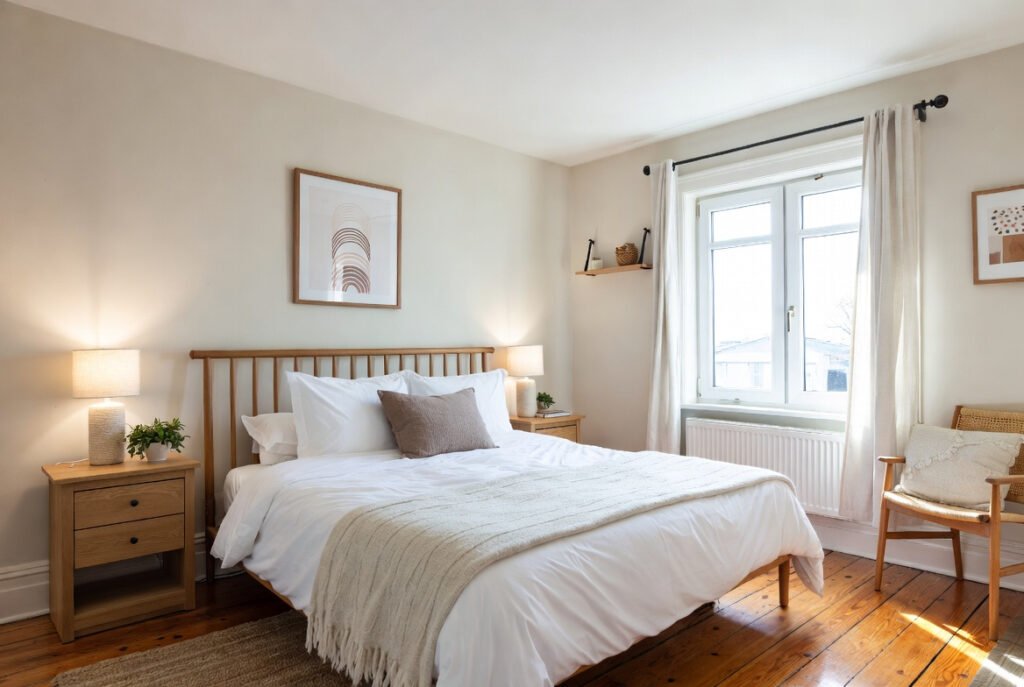
Bed and bedding:
- Invest in quality mattress providing comfortable sleep
- Use mattress protector under fitted sheet
- Provide pillows suitable for different sleep positions (minimum 4 for double beds)
- Stock fresh bed linen for immediate changeover between guests
- Choose cotton or cotton-blend sheets rather than polyester
- Include extra blanket for guests who prefer warmer sleeping
Furniture and storage:
- Provide bedside tables both sides of double beds
- Include bedside lamps with working bulbs
- Install wardrobe or clothes hanging space
- Add luggage rack or bench for suitcase storage
- Include full-length mirror
- Provide chest of drawers for longer stays
Room features:
- Install blackout curtains or blinds for good sleep environment
- Ensure windows open for ventilation
- Provide wastepaper bin
- Include alarm clock
- Add phone charger (USB ports increasingly expected)
- Consider small fan for summer months
Bathroom Preparation
Essential facilities:
- Install shower with good water pressure and temperature control
- Provide bath mat to prevent slipping
- Ensure adequate hot water supply
- Fix any dripping taps or running toilets
- Verify toilet flushes reliably
- Check sink drains properly
Toiletries and supplies:
- Stock toilet paper (leave at least 2 rolls visible)
- Provide hand soap at sink
- Include shower gel or body wash
- Add shampoo and conditioner
- Provide clean hand towels
- Stock bath towels (2 per guest minimum)
- Include bath mat
Bathroom features:
- Install good lighting including mirror lighting
- Provide mirror (wall-mounted and demisting if possible)
- Include bathroom bin with lid
- Add shelf or hooks for guest toiletries
- Ensure adequate ventilation (window or extractor fan)
- Keep bathroom cleaning supplies accessible for guest use
Kitchen Preparation (Entire Homes)
Cooking equipment:
- Provide full set of pots and pans in various sizes
- Include baking trays and oven dishes
- Stock sharp knives with chopping board
- Add mixing bowls, measuring jugs, colander
- Include basic utensils (wooden spoons, spatulas, ladles, tongs)
- Provide tin opener, bottle opener, corkscrew
Crockery and cutlery:
- Stock plates, bowls, and side plates (8 of each minimum)
- Provide mugs and glasses (8 of each)
- Include full cutlery set for 8 people
- Add serving dishes and utensils
Appliances:
- Ensure kettle, toaster, microwave all function properly
- Provide coffee maker (cafetiere, filter machine, or pod machine)
- Check oven, hob, and extractor fan work correctly
- Verify dishwasher functions if provided
- Test fridge maintains correct temperature (3-5°C)
Kitchen supplies:
- Stock washing up liquid, sponge, and tea towels
- Provide kitchen roll
- Include cleaning spray and cloths
- Add bin bags
- Provide basics (salt, pepper, cooking oil, tea, coffee, sugar)
- Include dishwasher tablets if dishwasher provided
Kitchen organization:
- Label cupboards showing contents
- Ensure adequate food storage space
- Clear work surface space for food preparation
- Provide instruction cards for complex appliances
Living Area Preparation
Seating and comfort:
- Provide adequate comfortable seating for maximum guest capacity
- Include coffee table or side tables
- Ensure good lighting with mix of overhead and lamps
- Add cushions and throws for comfort
Entertainment:
- Provide smart TV with streaming services (Netflix, etc.)
- Ensure reliable WiFi with adequate speed for streaming and work
- Display WiFi password prominently
- Include books, magazines, or board games
- Provide speaker for music if suitable
Practical features:
- Include wastepaper bin
- Provide coasters for drinks
- Add charging points accessible from seating
- Ensure heating controls clearly labeled and easy to use
- Include instructions for TV and any complex systems
Additional Touches
Welcome provisions:
- Leave welcome note with local recommendations
- Provide fresh milk in fridge (small carton to avoid waste)
- Include biscuits or small snack
- Add fresh flowers or plant
- Leave tourist information and local maps
Practical items:
- Provide umbrella
- Include torch with working batteries
- Add first aid kit
- Provide spare keys clearly labeled
- Leave iron and ironing board
- Include clothes drying rack
- Provide vacuum cleaner for guest use
Documentation:
- Create house manual covering all appliances
- Include emergency contact numbers
- Provide WiFi details and passwords
- List nearby amenities (shops, restaurants, transport)
- Include house rules clearly stated
- Add checkout instructions
Understanding what’s included in professional Airbnb cleaning services helps you maintain the standards guests expect between bookings.
How to Create an Airbnb Listing
Your listing is your primary marketing tool. Quality listings attract more bookings and better guests.
Professional Photography
Photos determine whether guests click on your listing. Properties with professional photos receive significantly more bookings than those with amateur images.
What to photograph:
- Every room guests can access
- Multiple angles of bedrooms and living spaces
- Bathroom showing cleanliness and amenities
- Kitchen highlighting appliances and space
- Outdoor areas if applicable
- Street view showing property exterior
- Nearby amenities and attractions
- Unique features (views, garden, period details)
Photography tips:
- Schedule photos during daylight with natural light
- Open curtains and turn on all lights
- Remove personal items and clutter completely
- Style spaces with cushions, throws, flowers
- Ensure everything spotlessly clean
- Take horizontal photos (landscape orientation)
- Use wide-angle lens or setting for room shots
- Shoot from corners to show maximum space
Photo order matters:
- Lead with your best, most attractive photo
- Place bedroom photos early (guests want to see sleeping arrangements)
- Show bathroom photos prominently
- Include kitchen photos for entire homes
- End with location and amenity photos
Many hosts hire professional property photographers. Airbnb offers free photography in some cities. Check Airbnb’s resources for availability in your area.
Writing Your Listing Description
Your description sells your property to potential guests. Focus on features guests care about and write clearly.
Title creation:
- Include your most attractive feature (view, location, unique element)
- Mention property type and size
- Add location or nearby landmark
- Keep under 50 characters
- Examples: “Bright 2-Bed Flat Near Canary Wharf” or “Cosy Cottage with Garden – Central Oxford”
Description structure:
- Start with your unique selling point in first sentence
- Describe the space clearly (rooms, layout, size)
- Highlight special features (parking, garden, workspace, balcony)
- Mention nearby attractions or transport
- Explain what makes your property special
- Describe the neighborhood and local area
- Note any potential issues honestly (stairs, road noise, construction nearby)
What to include:
- Sleeping arrangements in detail (bed types, room configurations)
- Bathroom facilities (number, bath vs shower)
- Kitchen equipment for entire homes
- Work-friendly features (desk, fast WiFi, quiet space)
- Parking availability and type
- Transport connections and walking times
- Nearby shops, restaurants, attractions
- House rules clearly stated
Writing style:
- Use short paragraphs for easy reading
- Write in present tense
- Be specific rather than vague (“10-minute walk to King’s Cross” not “near station”)
- Avoid overused phrases (“hidden gem,” “home away from home”)
- Be honest about limitations
Setting House Rules
Clear house rules prevent misunderstandings and protect your property.
Essential rules to state:
- Maximum guest capacity
- Check-in and checkout times
- Smoking policy (usually prohibited)
- Pet policy
- Party or event prohibition
- Quiet hours if applicable
- Additional guest charges if any
- Parking instructions and restrictions
Additional rules to consider:
- Shoe removal requirements
- Kitchen usage guidelines
- Heating/cooling instructions and limits
- Security deposit terms
- Damage liability
- Early checkout or late check-in procedures
Display rules clearly in your listing and provide printed copy in the property.
Selecting Amenities
List all amenities accurately. Guests filter searches by amenities so complete listings appear in more searches.
Essential amenities:
- WiFi (state speed if fast)
- Heating
- Hot water
- Bed linens
- Towels
- Toilet paper
- Soap and shampoo
Valuable amenities that increase bookings:
- Parking (dedicated space worth highlighting)
- Washing machine
- Dishwasher
- TV with streaming services
- Workspace with desk
- Fast WiFi (specify speed if 100+ Mbps)
- Air conditioning (increasingly valuable)
- Garden or outdoor space
- Self check-in option
Amenities to mention if available:
- Lift in building
- Luggage drop-off before check-in
- Long-term stay discounts
- Flexible checkout
- Baby equipment (cot, high chair)
- Bike storage
- EV charging
Be honest about amenities. Listing amenities you don’t provide generates poor reviews and guest complaints.
Setting Your Initial Pricing
Pricing strategy affects booking success significantly. Research local market rates before setting prices.
Research competitor pricing:
- Search Airbnb for properties in your area
- Filter by property type, size, and location similar to yours
- Check calendar availability and pricing
- Note seasonal variations
- Identify price ranges for different property standards
Pricing considerations:
- Start slightly below market average for first bookings
- Increase prices after earning initial positive reviews
- Offer discounts for weekly or monthly stays
- Charge premium rates for peak seasons, weekends, local events
- Reduce rates during quiet periods to maintain occupancy
Dynamic pricing:
- Consider using Airbnb’s Smart Pricing tool
- Research third-party dynamic pricing software
- Manually adjust prices based on demand and booking pace
- Monitor competitor pricing regularly
How to Prepare Your First Airbnb Booking
When you receive your first booking you need proper preparation and professional management.
Preparing for First Guest Arrival
Final property checks:
- Complete thorough clean 24 hours before arrival
- Test all appliances, lights, heating, hot water
- Stock all promised amenities and supplies
- Place fresh flowers or welcome touches
- Verify beds made with fresh linens
- Check bathrooms spotlessly clean with fresh towels
- Ensure WiFi works and password accessible
- Remove any personal items you missed earlier
Communication with guest:
- Send welcome message immediately after booking confirmation
- Provide check-in instructions 48 hours before arrival
- Confirm arrival time 24 hours before check-in
- Share WiFi password, door codes, parking instructions
- Offer to answer any questions
- Provide your phone number for check-in day
Access arrangements:
- Install smart lock with unique codes for each booking
- Use key safe with combination lock
- Arrange personal meeting for check-in if preferred
- Provide clear instructions for accessing property
- Explain any tricky doors, gates, or building entry
Managing Check-In
Smooth check-in process:
- Ensure property ready 1 hour before stated check-in time
- Be available by phone during check-in window
- Send reminder message on check-in day with access details
- Wait for guest message confirming successful entry
- Respond quickly to any check-in issues
If meeting guests personally:
- Arrive 10 minutes before agreed time
- Give property tour highlighting key features
- Demonstrate any complex appliances or systems
- Answer questions about local area
- Provide printed house manual and local recommendations
- Keep meeting brief unless guests want longer chat
Post-check-in:
- Send message few hours after check-in asking if everything satisfactory
- Address any issues immediately
- Provide restaurant or activity recommendations if requested
- Remain available for questions during stay
- Respect guest privacy unless they request assistance
During the Stay
Guest communication:
- Respond to messages within 2 hours during daytime
- Address maintenance issues same day
- Recommend local restaurants, attractions, transport when asked
- Resolve problems before they become review complaints
- Don’t contact guests unnecessarily
Property monitoring:
- Avoid dropping by unexpectedly
- Only enter property during stay for emergencies or with advance notice
- Check property condition discreetly if concerns arise
- Monitor neighbourhood feedback if applicable
Managing Checkout
Checkout communication:
- Send checkout reminder message evening before departure
- Confirm checkout instructions (key return, rubbish, dishwasher)
- Ask guests to text when they leave
- Thank them for staying
Post-checkout inspection:
- Visit property within 2 hours of checkout
- Check for damage, missing items, or excessive mess
- Photograph any damage immediately
- Report damage through Airbnb resolution center within 24 hours
- Begin turnover cleaning immediately
Review process:
- Leave honest, positive review for good guests within 48 hours
- Encourage guests to leave review through friendly message
- Respond professionally to any negative feedback
- Learn from constructive criticism
How to Maintain High Cleaning and Turnover Standards
Cleanliness ratings affect your search ranking and booking success more than any other factor. Maintaining consistently high standards requires systems and effort.
Cleaning Between Guests
Turnover cleaning requirements: Every surface in the property needs cleaning between guests, not just visible dirt. Guests expect hotel-standard cleanliness.
Professional hosts follow detailed Airbnb cleaning checklists that cover every room systematically to ensure nothing gets missed.
Time required for thorough cleaning:
- Studio or 1-bedroom: 1.5-2 hours
- 2-bedroom property: 2.5-3 hours
- 3-bedroom property: 3-4 hours
- 4+ bedroom property: 4-5 hours
These times assume properties left in reasonable condition. Properties requiring deep cleaning due to guest mess add 30-60 minutes.
Critical cleaning focus areas:
- Bathrooms must be spotless (toilets, showers, sinks, mirrors)
- Kitchens require complete cleaning (inside appliances, all surfaces)
- Floors need thorough vacuuming and mopping
- Beds must have completely fresh linens
- All surfaces need dusting and wiping
- Windows and mirrors must be streak-free
- Bins emptied and fresh liners installed
Common cleaning mistakes:
- Rushing cleaning between tight turnovers
- Missing high-touch areas (light switches, door handles, remote controls)
- Leaving hair in bathrooms
- Not checking inside appliances (microwave, oven, fridge)
- Forgetting to replace toiletries and supplies
- Leaving streaky mirrors or windows
- Overlooking under furniture and in corners
Professional Cleaning Services
Many hosts use professional Airbnb turnover services to maintain consistent quality and save time.
When to use professional cleaners:
- You host frequently (15+ bookings monthly)
- You have same-day turnovers with 4-hour windows
- You live far from your property
- You struggle to maintain consistent cleaning standards
- You manage multiple properties
- Your time is better spent on other activities
Benefits of professional services:
- Consistent hotel-standard cleaning every time
- Faster turnovers allowing more bookings
- Backup coverage when primary cleaner unavailable
- Professional cleaning products and equipment
- Damage reporting and property inspection
- Linen changing and restocking
Managing professional cleaners:
- Provide detailed checklist of expectations
- Inspect first 3-5 cleans personally
- Give immediate feedback on any issues
- Check guest reviews mentioning cleanliness
- Switch services if quality doesn’t meet standards
Linen Management
Linen requirements:
- Stock 3 complete bed linen sets per bed
- Keep 3 complete towel sets per guest capacity
- Replace worn or stained items immediately
- Wash linens at 60°C minimum for hygiene
- Check linens for stains before reuse
Linen service options:
- Wash linens yourself between guests
- Use launderette for larger properties
- Hire linen service collecting and returning clean linens
- Use professional cleaning service including linen management
Property Maintenance
Regular maintenance schedule:
- Deep clean property monthly (beyond turnover cleaning)
- Check and replace smoke/CO alarm batteries quarterly
- Service appliances annually
- Repaint high-traffic areas yearly
- Replace mattresses every 3-5 years
- Replace towels and linens when showing wear
- Update decor and furnishings every 2-3 years
Preventive maintenance:
- Fix small issues before they become major problems
- Address guest feedback about maintenance promptly
- Check property thoroughly every few weeks
- Monitor appliance performance
- Keep supplies of light bulbs, batteries, toilet paper stocked
Pricing and Occupancy Strategy
Setting rates that maximize revenue while maintaining good occupancy requires ongoing strategy.
Understanding Seasonal Demand
London and UK cities show distinct seasonal patterns affecting what guests pay and when they book.
Peak season (June-September): Highest demand from tourists, families during school holidays, and summer travelers. Properties command premium rates and fill quickly. Competition also peaks as more properties list.
Shoulder season (March-May, October-November): Moderate demand from tourists and business travelers. Rates sit between peak and low season. Good occupancy is still achievable with competitive pricing.
Low season (December-February): Lowest demand except Christmas and New Year periods. January and February are particularly quiet. Competitive pricing necessary to maintain bookings.
Event-driven demand: Major concerts, sports events, conferences, festivals create temporary demand spikes. Research local event calendars and increase rates 30-60 days before major events.
Pricing Strategies
Weekend vs weekday pricing: London properties near tourist attractions charge 20-30% more for Friday and Saturday nights. Properties in business districts charge more Monday-Thursday. Adjust your strategy based on your location and primary guest type.
Length-of-stay discounts: Offering 10% discount for 7+ night stays and 15% discount for 28+ night stays encourages longer bookings. Longer stays reduce turnover frequency, cutting cleaning and management time.
Last-minute pricing: Reduce rates 15-25% for bookings made within 7 days of check-in. Empty nights generate zero revenue. Discounted bookings at least cover variable expenses.
Minimum stay requirements: Setting 2-night minimums increases profitability per booking by reducing turnover frequency. However, this excludes single-night travelers. Balance revenue per booking against total booking opportunities.
Maximizing Occupancy
Instant Book feature: Properties with Instant Book enabled appear higher in search results. Guests increasingly filter searches to show only Instant Book properties. Enable this once you have 10+ positive reviews and feel confident screening through Airbnb’s verification.
Response time and rate: Responding to inquiries within 1 hour increases booking conversion by 25-40% compared to 4-hour response times. Airbnb’s algorithm favors hosts with 90%+ response rates.
Calendar management: Keep your calendar updated daily. Block unavailable dates immediately. Open dates far in advance (12 months) to capture early planners.
Flexible cancellation: Offering flexible cancellation policies increases bookings by 15-25% but increases cancellation risk. Start with moderate policy and adjust based on cancellation experience.
Reviews and ratings: Properties rated 4.8+ stars achieve 20-30% higher occupancy than those rated 4.5-4.7 stars. Focus on earning 5-star reviews through excellent service and cleanliness.
How to Start an Airbnb Without Owning Property
Some people host properties they don’t own through rental arbitrage or management arrangements.
Rental Arbitrage
Rental arbitrage means renting properties on long-term contracts then subletting them on Airbnb for higher short-term rates.
How it works:
- Find landlords willing to allow subletting
- Sign tenancy agreement explicitly permitting short-term subletting
- Furnish and prepare property for Airbnb
- List property and manage bookings
- Pay monthly rent to landlord from Airbnb income
- Keep the profit difference
Challenges and risks:
- Most landlords refuse rental arbitrage entirely
- Finding willing landlords requires significant searching
- Landlords usually demand percentage of Airbnb income
- You carry financial risk if bookings don’t cover rent
- You need startup capital for furniture and supplies
- Lease terms typically require minimum commitment periods
- Ending arrangement means losing all furniture investment
Legal requirements:
- Explicit written permission in tenancy agreement
- Landlord consent to specific short-term letting
- Compliance with all local regulations and licensing
- Appropriate insurance covering subletting arrangement
Rental arbitrage works in some markets but carries substantial risks. Many beginners underestimate challenges and lose money through vacant periods, furniture costs, and cleaning expenses exceeding projections.
Property Management
Some property owners hire others to manage Airbnb listings as their agent.
Management arrangements:
- Owner pays you fee (typically 15-25% of booking revenue)
- You handle listing creation, guest communication, cleaning coordination, maintenance
- Owner retains property ownership and financial responsibility
- You provide service without property investment
Finding management opportunities:
- Advertise property management services locally
- Contact owners of poorly-managed Airbnb listings offering improvements
- Network with property investors at real estate events
- Market through local Facebook groups and community boards
Management service requirements:
- Proven track record managing properties or hospitality experience
- Local knowledge and availability
- Systems for cleaning, maintenance, guest communication
- Professional approach and reliability
- Understanding of regulations and compliance
How to Scale Your Airbnb Hosting
Once you master hosting one property successfully, you might consider expanding.
From Spare Room to Entire Home
Many hosts start by renting spare rooms and later transition to renting entire homes.
Making the transition:
- Build hosting experience and positive reviews with spare room hosting
- Understand regulations affecting entire home hosting (90-night rule in London)
- Assess whether entire home hosting suits your lifestyle
- Calculate whether revenue justifies losing property access
- Apply for planning permission if hosting beyond 90 nights annually
Managing Multiple Properties
Scaling to multiple properties requires a different approach than managing one property.
Systems needed:
- Calendar management preventing double bookings across properties
- Cleaning coordination with reliable team or service
- Maintenance tracking for multiple properties
- Automated guest messaging systems
- Financial tracking separating revenue and expenses per property
Staffing requirements:
- Cleaners for each property or cleaning service
- Maintenance person for urgent repairs
- Virtual assistant for guest communication
- Property manager if operating many properties
Financial considerations:
- Each property needs separate financial tracking
- Business accounting becomes essential
- Limited company structure may provide benefits
- Professional accountant helps optimize tax position
Achieving Superhost Status
Superhost status provides credibility and increases bookings.
Superhost requirements:
- Complete at least 10 stays or 100 nights in past year
- Maintain 90%+ response rate
- Keep 4.8+ overall rating
- Less than 1% cancellation rate (excluding extenuating circumstances)
- Meet criteria for 4 consecutive assessment quarters
Benefits of Superhost status:
- Special badge on listing increasing guest confidence
- Higher search ranking
- Exclusive support line
- Quarterly Superhost travel coupon
- Increased booking conversion
Maintaining Superhost: Focus on response time, cleanliness, communication, and exceeding guest expectations consistently. One period of poor performance loses status requiring 3 months to regain.
Frequently Asked Questions
Do I need planning permission to host on Airbnb?
In London, you don’t need planning permission to host in your primary residence up to 90 nights annually. Beyond 90 nights requires planning permission. Outside London, requirements vary by local authority. Properties not your main residence usually require planning permission for short-term letting. Check with your local planning office.
How much can I earn as an Airbnb host?
Earnings vary dramatically based on location, property type, and hosting frequency. Spare room hosts in London typically earn several thousand pounds annually. Entire home hosts in prime locations can generate substantial income. Your earnings depend on nightly rate, occupancy rate, and hosting expenses. Calculate potential earnings by researching similar properties in your area.
Do I need to pay tax on Airbnb income?
Yes, Airbnb income is taxable. If hosting in your main home, Rent-a-Room relief allows up to £7,500 annual tax-free income. Above this threshold or for second properties, declare income through Self Assessment tax return. Income over £1,000 annually requires tax declaration. Consult an accountant about allowable expense deductions.
Can I host on Airbnb if I have a mortgage?
You need explicit permission from your mortgage lender. Most residential mortgages prohibit commercial activity including Airbnb hosting. Contact your lender before hosting to request permission or discuss switching to an appropriate mortgage product. Hosting without permission breaches mortgage terms and risks lenders demanding full repayment.
What insurance do I need for Airbnb hosting?
Standard home insurance doesn’t cover short-term letting. You need specialist short-term let insurance including public liability, buildings and contents cover, and loss of income protection. Airbnb’s AirCover provides limited protection but doesn’t replace proper insurance. Hosting without appropriate insurance leaves you personally liable for damages and injuries.
How do I handle guest damage?
Document property condition with photos before each guest. Inspect property within 2 hours of checkout. Report damage through Airbnb Resolution Center within 24 hours including photos as evidence. Request compensation from guests through the platform. If a guest doesn’t respond or pay, Airbnb may cover damage under AirCover up to coverage limits. Insurance covers major damage beyond AirCover limits.
Final Thoughts
Start by verifying short-term letting is permitted in your area and obtaining necessary permissions from mortgage lenders, landlords, or freeholders. Invest time preparing your property properly including safety equipment, quality furnishings, and welcoming touches that create positive guest experiences.
Your first few bookings establish your hosting reputation through reviews. Focus on cleanliness, communication, and exceeding expectations to earn five-star reviews that drive future bookings. Consider professional services for cleaning and property management as booking frequency increases.
London hosts must track nights carefully to comply with the 90-night rule. Scottish hosts need mandatory licensing before accepting any bookings. All UK hosts need appropriate insurance protecting against guest damage and liability claims.
Monitor your occupancy rates, adjust pricing based on demand, and maintain property condition to sustain long-term hosting success. Hosting requires ongoing effort but provides income and opportunities to meet travelers from around the world.
Better Maid Airbnb Cleaning provides professional cleaning services supporting Airbnb hosts across Greater London. Our services maintain the cleanliness standards that protect your review ratings and keep guests satisfied. We serve Canary Wharf, Tower Hamlets, Westminster, Kensington, Chelsea, Hackney, Camden, Southwark, Lambeth, and surrounding areas.
📞 Call us: 0204-603-4190
🌐 Book online: https://airbnbcleanerslondon.co.uk/contact-us/