
By AirbnbCleanersLondon Editorial Team · Updated 2026-08-18
Eco-friendly cleaning in London homes relies on non-toxic swaps: white vinegar and bicarbonate of soda for limescale, microfibre cloths instead of disposable wipes, and reduced plastic packaging. AirbnbCleanersLondon’s cleaners use eco-friendly products across every job, protecting children, pets, and London’s period and modern properties alike, with rates starting at £25 per hour.
Why Does Eco-Friendly Cleaning Matter in London Homes?
London properties demand cleaning methods that protect both residents and the city’s diverse housing stock. Georgian terraces, Victorian conversions, and glass-fronted new builds each carry different risks when harsh chemicals meet delicate surfaces or high-spec finishes. AirbnbCleanersLondon provides professional cleaning services across London homes, offices, and rental properties, with rates starting at £25 per hour, giving residents a consistent, chemical-conscious standard regardless of property type.
Households with children or pets face elevated exposure risks from conventional cleaning agents, which often contain volatile compounds that linger in carpets and soft furnishings. AirbnbCleanersLondon’s cleaners are fully vetted and DBS-checked. Every team uses eco-friendly products designed to keep families safe without sacrificing results.
Do period properties need different cleaning products than modern flats?
Yes. Historic buildings with original plasterwork, wood panelling, or aged stonework require gentler, non-abrasive formulas that won’t strip finishes accumulated over decades. Modern apartments with polished concrete, glass, or engineered surfaces tolerate different eco-friendly formulations altogether. AirbnbCleanersLondon tailors its approach across both property types.
Are eco-friendly products as effective as traditional cleaning chemicals?
Reputable eco-friendly formulas remove grime, grease, and bacteria without relying on harsh solvents. The distinction lies in ingredient safety, not cleaning power. For London households balancing indoor air quality with high standards of cleanliness, this trade-off simply doesn’t exist.
What Simple Swaps Cut Chemical Waste at Home?
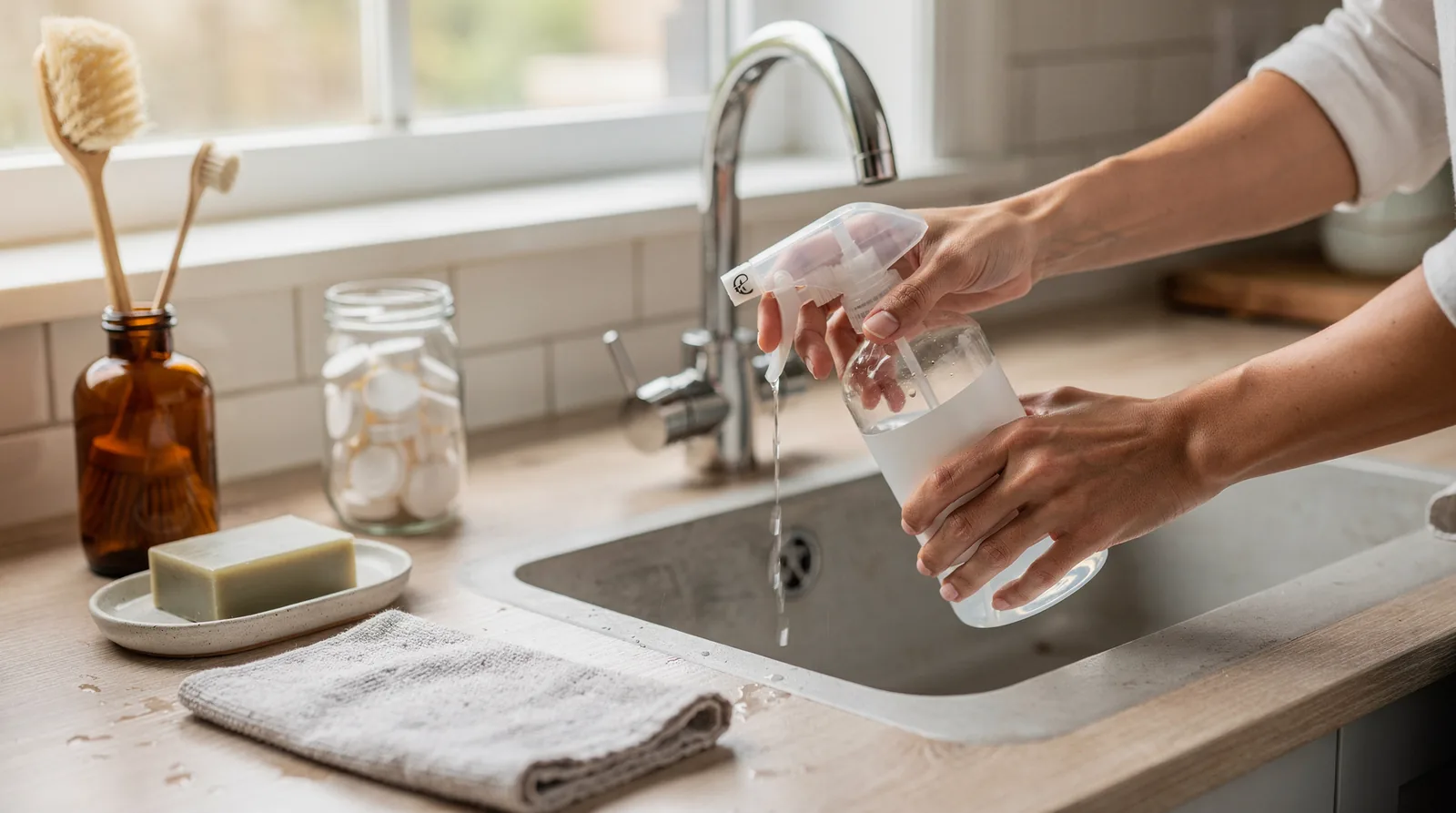
Two straightforward swaps eliminate most chemical waste generated by household cleaning in London flats and houses. Ditching plastic-bottled sprays for refillable glass containers cuts single-use plastic significantly. Switching to lemon juice for surface cleaning replaces synthetic disinfectants with a naturally antimicrobial alternative.
Airbnb cleaning hosts across London face the same choice every changeover. Guests notice bottled chemical smells fast, and plastic waste piles up quickly when turnovers happen weekly. Swapping to glass storage solves both problems at once.
Where can Londoners refill cleaning products sustainably?
Refill shops have expanded across many London boroughs, offering concentrated cleaning solutions dispensed into reusable glass bottles. Recycling old plastic containers before switching keeps the transition genuinely low-waste rather than simply relocating plastic to a landfill bin.
Does lemon juice actually disinfect surfaces?
Lemon’s natural acidity gives it antimicrobial properties strong enough for everyday surface cleaning, according to sustainability research cited by green-cleaning guides. Kitchen counters, chopping boards, and bathroom fixtures respond well to a lemon-based solution without the synthetic residue left by conventional sprays.
For renters and homeowners managing a Holiday let cleaning schedule, these swaps matter beyond the environment. Guests increasingly ask about eco-friendly practices before booking, and a chemical-free property earns better reviews.
Practical swaps worth adopting immediately:
Replace plastic spray bottles with glass, refilled at a local eco-store
Use fresh lemon juice diluted in water for kitchen and bathroom surfaces
Recycle emptied plastic containers rather than discarding with general waste
Store cleaning concentrates in bulk to reduce packaging trips
Short let cleaning providers serving London properties increasingly favour these methods over aerosol-heavy routines. An Airbnb turnover clean built around glass refills and lemon-based disinfecting protects indoor air quality between guest stays, a detail health-conscious travellers now factor into their booking decisions.
How Should Londoners Tackle Eco Deep Cleaning?
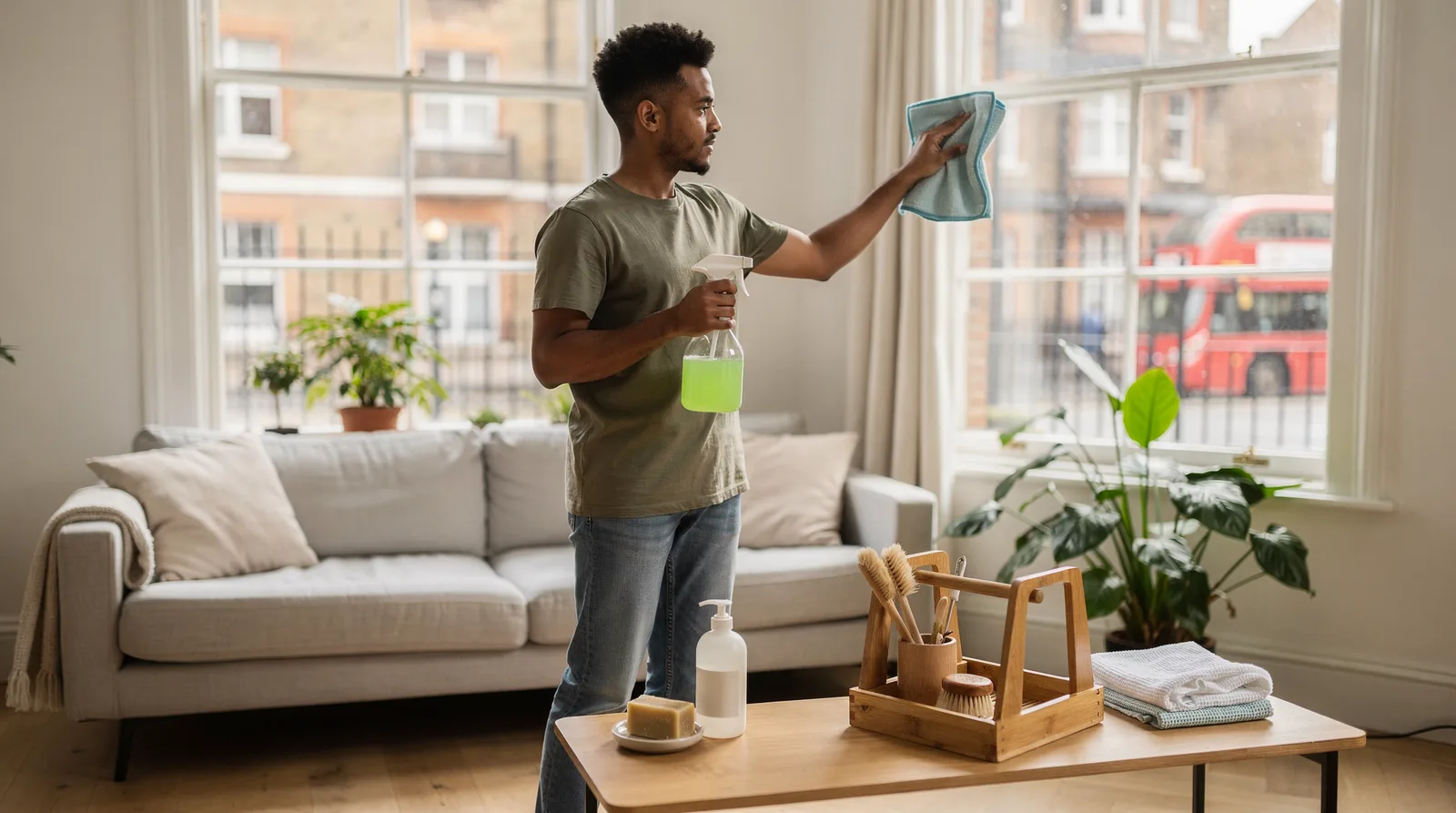
Eco deep cleaning in London demands attention to the spots standard tidying skips entirely. Grease-caked stove grates, dust-choked corners after renovation work, and neglected extraction points all carry hygiene and safety risks that a quick wipe-down never resolves. For landlords managing an Airbnb cleaning turnaround or a resident refreshing a period flat, thorough deep cleaning protects both property value and guest safety.
Cast-iron stove grates in London kitchens build up a thick coating of grease and burnt-on food over time. Casual wiping rarely touches that layer. Left unchecked, the residue turns hazardous: accumulated grease is highly combustible, turning what looks like a cosmetic problem into a genuine fire-safety concern. This risk matters most in holiday let cleaning. Fast turnovers between guests leave little time for grates to be checked properly.
Why does post-renovation dust get missed so often?
Dust from building work settles into corners, skirting boards, and behind fittings—areas many cleaning crews pass over during a standard tidy. Paint marks linger on surfaces long after a refurbishment is declared finished, undermining the polished look landlords and homeowners expect. An Airbnb turnover clean built around a proper eco deep-clean checklist catches these residues before the next guest arrives.
What happens when Londoners skip scheduled deep cleans?
Relying on reactive, non-scheduled maintenance lets grease, dust, and residue accumulate unnoticed until problems surface—a fire hazard, a poor review, or a costly repair. Recurring short let cleaning avoids this pattern entirely. Booking a fixed schedule demonstrates the value proposition of contract cleaning: consistent standards, every kitchen and corner guest-ready, across London’s fast-moving short-stay market.
How Can Eco-Cleaning Improve Airbnb Turnovers?
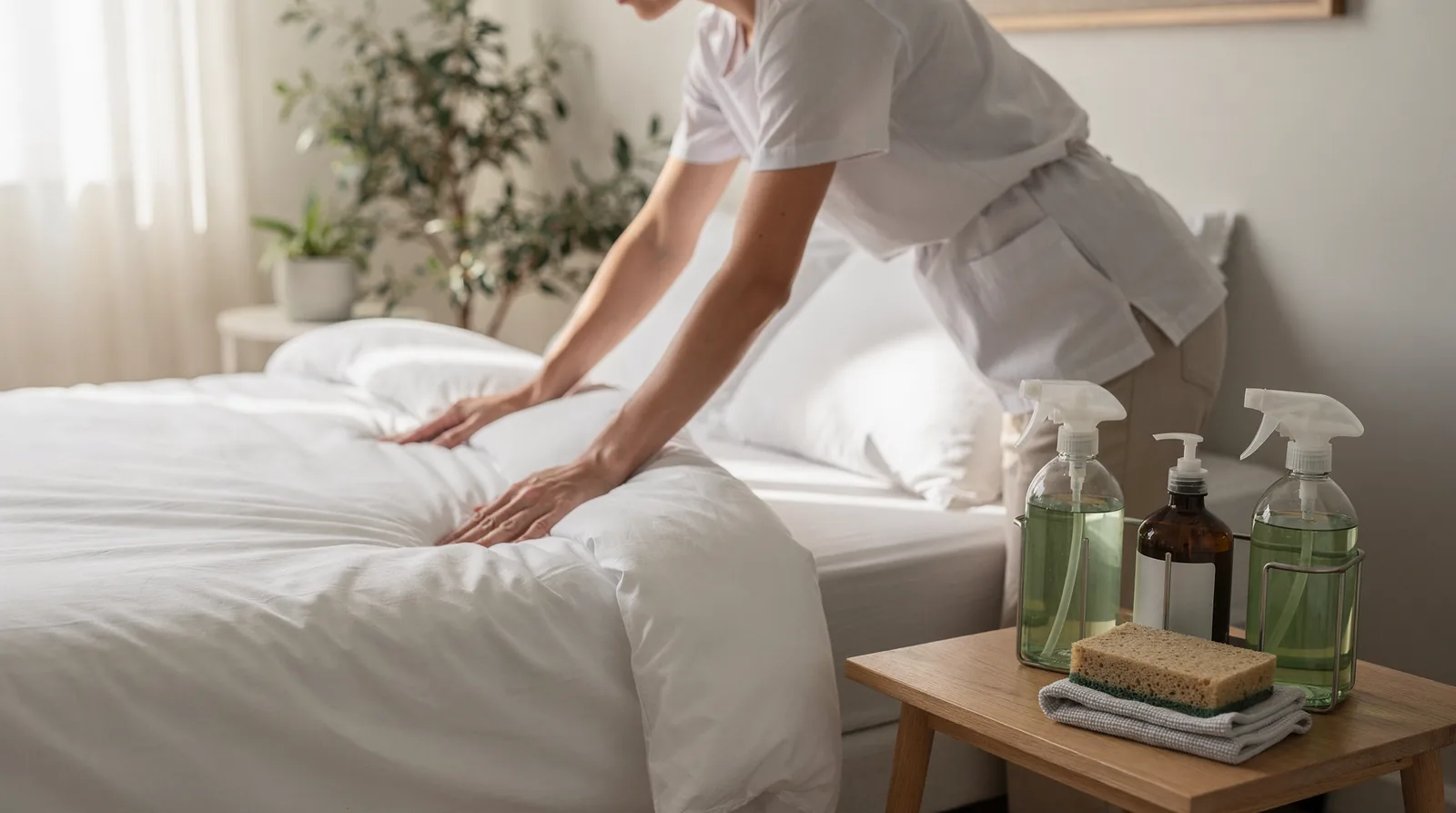
Guest reviews hinge on spotless surfaces more than almost any other factor. Airbnb’s own data places cleanliness among the top three drivers of guest ratings, ahead of many amenities hosts spend heavily to provide. London hosts using non-toxic products protect that score while avoiding the chemical residues that trigger allergic reactions in sensitive guests, pets, or children staying between bookings.
Airbnb cleaning in London carries a wide cost range depending on property size. Holiday let cleaning for a studio changeover runs £40-£80, while a five-bedroom property reaches £140-£260 per turn. Location pushes these figures higher still: London properties pay 15-a notable share more than the national average, driven by labour costs, congestion charges, and parking fees near central postcodes.
How much extra does a same-day turnover cost?
Back-to-back bookings with no gap between guests demand faster, tighter work. Cleaners command a premium of £8-£12 per hour above standard changeover rates for this compressed schedule. Hosts running frequent same-day flips in busy London neighbourhoods should budget for that added cost rather than treat it as a surprise.
Does eco-friendly cleaning affect turnover speed?
Non-toxic products work just as fast as harsh chemical alternatives when paired with a structured checklist. Speed comes from process, not from the chemistry of the cleaning agent. A short let cleaning routine built around consistent steps, restocking, and staging keeps eco-friendly practices compatible with tight guest-changeover windows.
Three factors shape turnover quality most directly:
Property size — larger flats need more turnover time and higher changeover fees.
Guest schedule gaps — same-day flips carry an hourly premium over standard bookings.
Product choice — non-toxic supplies protect ratings without slowing the clean.
An Airbnb turnover clean built on these three factors keeps ratings high and guests returning.
When Should You Book a Professional Eco Clean?
Timing determines results. A professional eco clean delivers the greatest value when scheduled around specific triggers in a London home or rental, rather than left to chance. Waiting until dust, grease, or allergens build up creates a state of reactive, non-scheduled maintenance. Every visit becomes a rescue mission instead of a routine refresh. That approach costs more time, more product, and more stress than a planned cleaning calendar.
London households benefit from flexible scheduling options, including regular weekly, fortnightly, or one-off cleaning, depending on occupancy and lifestyle. A family with children and pets in Clapham may need weekly visits to manage allergens naturally. A single professional in a Shoreditch flat might prefer fortnightly upkeep between busier stretches.
Common triggers for booking include:
Moving into or out of a rented flat in London
Preparing a holiday let cleaning turnover between guest stays
Managing an Airbnb turnover clean on a tight same-day changeover
Post-renovation dust removal in a period property
Seasonal deep cleans ahead of guests or holidays
How do hosts handle short let cleaning between guests?
Short let cleaning works best on a fixed schedule tied to booking calendars, not guesswork. Airbnb cleaning and holiday let cleaning both demand consistency, since a missed changeover damages guest reviews and future bookings.
How quickly can a London resident get matched with a cleaner?
Clients are matched with a regular cleaner within 48 hours of booking. Every visit is backed by a a notable share satisfaction guarantee, supported by consistent quality and transparent pricing, so timing a first clean carries no financial risk.
Adopting eco-friendly cleaning practices represents a strategic investment in both environmental stewardship and household health. The methods outlined—from natural product formulations to sustainable application techniques—deliver measurable results without compromising efficacy or safety. London households that prioritise these approaches establish resilient cleaning protocols aligned with contemporary environmental standards, ensuring long-term property maintenance whilst reducing their ecological footprint. This integration of responsibility and performance defines modern household management.
FAQ
What are simple eco-friendly swaps for cleaning at home?
Use white vinegar and bicarbonate of soda for limescale, microfibre cloths instead of disposable wipes, and refillable glass containers instead of plastic-bottled sprays to cut chemical waste.
Do period London properties require special cleaning products?
Yes, historic buildings with original plasterwork, wood panelling, or aged stonework need gentler, non-abrasive formulas. Modern flats with polished concrete or glass tolerate different eco-friendly formulations.
Is lemon juice effective for disinfecting surfaces?
Lemon’s natural acidity provides antimicrobial properties strong enough for everyday cleaning, working well on kitchen counters, chopping boards, and bathroom fixtures without leaving synthetic residue.