Good Airbnb bathroom cleaning is about more than shiny taps. For a London host, it also means keeping mineral deposits manageable, spotting moisture problems early and knowing when to arrange a repair rather than ask for another scrub.
The practical approach is to clean for the surface, dry after cleaning, check ventilation and record recurring defects. Limescale and mould need different responses. A strong descaler is not a universal bathroom cleaner, and a freshly wiped wall does not prove a damp problem has been fixed.
This guide focuses on bathroom upkeep between bookings. It is not a mould-remediation method or a substitute for a qualified inspection where damp, leaks or extensive growth are present.
In this guide: identify the issue · protect finishes · changeover checks · mould and repairs · host handover
First, identify what needs attention
Thames Water explains that water across its supply region is hard and can leave a chalky limescale residue. That makes mineral build-up a familiar maintenance issue in London bathrooms, but it does not mean every mark on a tile is limescale.
Use the table to decide what to investigate—not to diagnose a material or identify mould from a photograph.
| What you notice | What to check | Sensible next step |
|---|---|---|
| White or chalky deposits around a tap or on shower glass | Whether the mark is a removable deposit and what the surface is made from | Follow the fitting or surface maker’s approved cleaning method |
| A film where soap or toiletries collect | Product residue, rinsing and the normal cleaning method | Use a compatible cleaner, then rinse and dry as directed |
| Dark spots, recurring patches or a persistent musty smell | Possible mould or an unresolved moisture source | Report promptly; arrange assessment where the cause or extent is unclear |
| Water returning after the area has been dried | A leaking fitting, failed joint or another source of water | Escalate for maintenance; record where and when the water appears |
| A dull patch that does not lift with the approved cleaner | Possible surface damage rather than dirt | Stop increasing chemical strength or abrasion; consult the supplier or a specialist |
Give each issue a clear location. “Bathroom needs attention” is difficult to act on remotely. “Water reappears at the left basin tap base after drying” tells the host what to investigate.
Choose the cleaning method by material—not by room
A bathroom can contain several finishes within a few centimetres of each other. The cleaner suitable for a ceramic basin may not suit the tap above it, the stone worktop around it or a coated shower screen nearby.
Create a short bathroom surface card for the property. Record the tap and shower brand, tile or stone type, any glass coating, approved product and cloth, and the relevant care-instruction link. If a finish is unknown, obtain that information before using a descaler on it.
Taps, shower fittings and special finishes
Check the instructions for the actual fitting. For example, hansgrohe’s tap-care guidance recommends a soft cotton cloth, compatible mild cleaner, thorough rinsing and drying; it warns against aggressive products and abrasive tools. Its recommendations should not be assumed to cover every brand or finish.
Do not leave a fitting soaking in a homemade solution or wrap it in a chemical-soaked cloth unless its manufacturer specifically permits that method. Black, brushed, plated and other decorative finishes deserve the same model-specific check as chrome.
Natural stone is not ordinary ceramic tile
Marble, limestone and travertine can be damaged by acidic products, including vinegar. The Natural Stone Institute’s care guidance explains why mild, non-acidic cleaning is important for acid-sensitive stone. Abrasives can also damage a finish.
Keep descaler away from adjacent stone, not just the surface being cleaned. A product approved for a tap does not automatically become safe when it runs onto the worktop below. Where deposits are persistent, ask the stone supplier or a restoration specialist for the correct treatment.
Shower glass, seals and grout
Follow the enclosure manufacturer’s instructions, especially for coated glass. Include the screen’s lower edge and seals in your visual check, but do not force tools behind seals or use sharp scrapers as a default solution. Photograph split sealant, loose sections or damaged grout for the host rather than treating them as ordinary surface dirt.
Chemical safety: never mix cleaning products. In particular, bleach must not be mixed with acidic descalers, vinegar, toilet cleaners or ammonia-containing products. The HSE’s hospitality cleaning guidance warns that incompatible products can release harmful gases. Follow labels and safety data sheets for protective equipment, ventilation, dilution and contact time. Do not layer a second product over residue from the first, and never decant chemicals into drinks containers.
An Airbnb bathroom cleaning routine for each changeover
Use this as a maintenance overlay to your normal bathroom clean, not a replacement for cleaning the toilet, basin, bath or shower, touchpoints and floor.
- Read the previous visit’s notes. Check whether an unresolved mark, leak or fan fault already has an owner and action date.
- Look before cleaning. Note visible deposits, staining, loose seals and unexpected water. Record suspected mould before disturbing it and follow the escalation guidance below.
- Check the agreed ventilation controls. Observe whether the fan responds normally. Do not remove covers, touch wiring or dismantle equipment as part of a turnover clean.
- Use the property’s approved products and tools. Follow the specified method and timings. More chemical or more scrubbing is not automatically a better result.
- Rinse where instructed and dry suitable surfaces. Inspect glass and fittings in normal light. Keep the floor dry and clear before sign-off.
- Report what cleaning has not resolved. Use a close-up plus a wider location photo, with the next booking time and the action needed.
Keep the inspection consistent: the same tap base, shower-screen edge and sealant line each visit. This makes a change easier to spot than a different collection of attractive bathroom photographs every time.
Make moisture control easy for guests
A guest should not have to guess which switch operates the extractor or whether an automatic fan has been switched off at its isolator. Keep the property instructions short and specific to the installed system. Ventilation should be maintained by someone competent; a fan making a noise is not proof that it extracts effectively.
The government’s damp and mould guidance emphasises fixing underlying moisture and ventilation problems, not simply removing visible growth. Do not blame guests for a building defect or ask them to compensate for a broken fan.
Example guest note—adapt it to your actual bathroom:
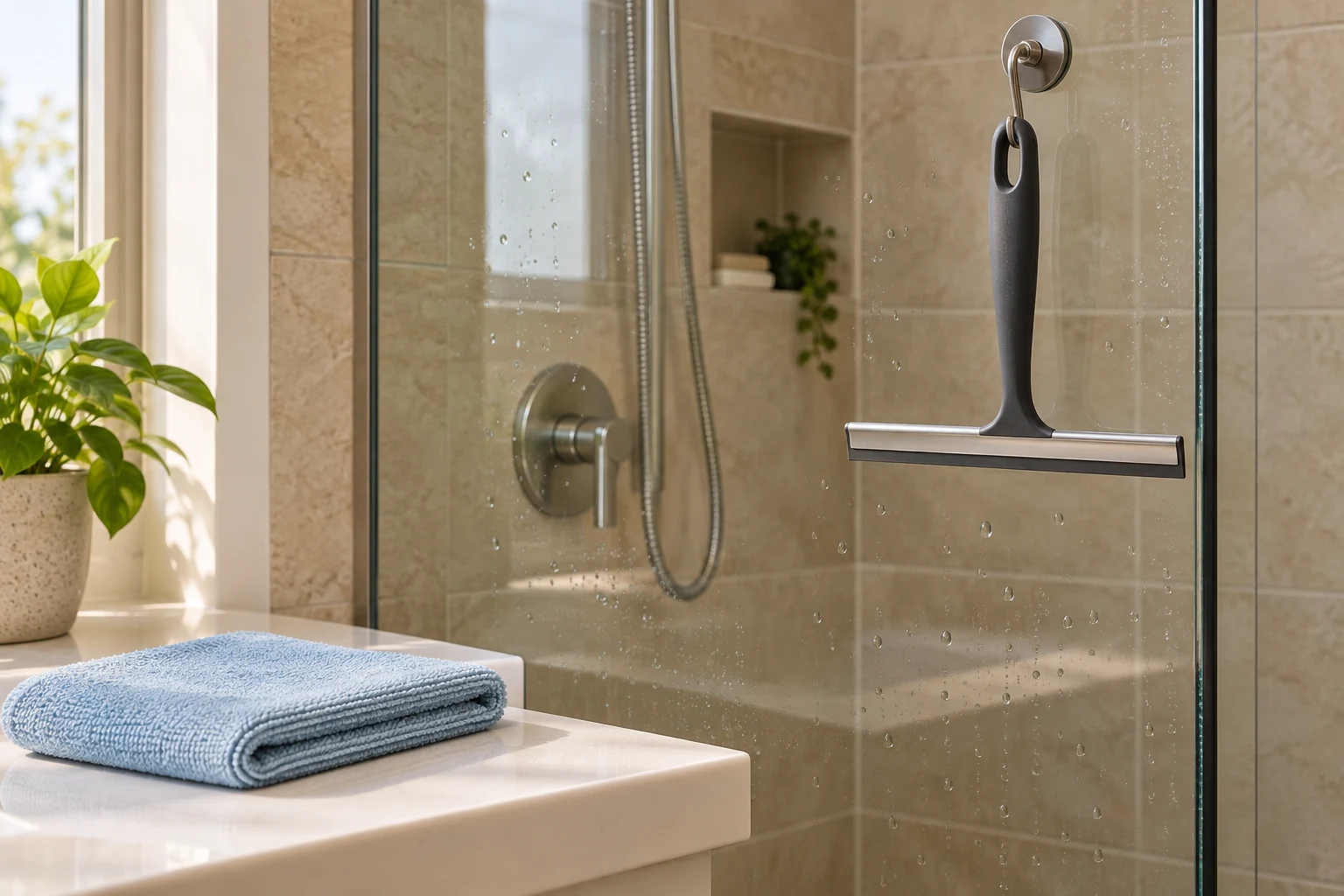
Please use the bathroom extractor as described in the house guide and leave its automatic run-on cycle to finish. There is a squeegee beside the shower if you would like to clear excess water from the screen. Please message us if you notice a leak or the fan does not seem to work.
Only include a run-on instruction if the fan really has that feature. Avoid generic advice to leave windows open when it would compromise security. The host’s checks still apply even if guests choose not to use the squeegee.
When mould needs more than a turnover clean
Treat suspected mould as a problem to resolve promptly, not a cosmetic mark to conceal before check-in. Do not assume its colour tells you whether it is harmless, and do not promise that a photo or a wipe-down proves the room is safe.
For a very small, localised area on a hard surface, a suitable mould product may be appropriate where the person doing the work is competent and the label and surface instructions allow it. Larger areas, repeated growth, an unclear source or a persistent musty smell need qualified assessment. Use the protective equipment and ventilation specified for the work; do not dry-brush or vacuum suspected mould.
The EPA’s mould-cleanup guidance also stresses addressing the water problem and recognises that affected absorbent materials may need replacement. Painting over a patch or covering a damaged joint does not resolve the cause.
If water is near electrical equipment, there is significant damage, or the suitability of the bathroom for guests is uncertain, stop routine work in the affected area and contact the host immediately. Arrange competent advice before treating the bathroom as guest-ready. A changeover deadline is not a reason to hide an unresolved concern.
The host or property manager should coordinate any plumber, ventilation contractor, building manager or damp specialist required. Agree responsibility explicitly: a turnover cleaner’s completion report is not a building survey, repair certificate or specialist mould clearance.
Separate the changeover checklist from planned maintenance
There is no single descaling frequency that suits every property. Booking intensity, local water, the fittings and the product instructions all matter. Start with observation at every turnover, then agree additional care based on how quickly deposits return and what the manufacturer recommends.
| Workstream | What belongs in it | What the host should organise |
|---|---|---|
| Every turnover | Routine cleaning, drying, visual checks and exception reporting | A clear property brief and contact for urgent decisions |
| Planned additional cleaning | Build-up that needs more time than the agreed changeover scope | Time, approved methods and confirmation of any additional charge |
| Repairs or specialist assessment | Recurring damp, failed ventilation, leaking joints or damaged materials | A suitable contractor, access and confirmation the issue is resolved |
Do not let a maintenance item disappear when the next cleaner arrives. Keep it open in the property log until the person responsible confirms completion and the next visit checks the outcome.
A bathroom issue report you can reuse
Copy this into your cleaner’s reporting brief:
- Property and bathroom: identify the room, especially in a multi-bathroom home.
- Visit and next arrival: date, time and how soon a decision is needed.
- Exact location: for example, the outside corner of the shower tray.
- Observation: describe what is visible without guessing the cause.
- Photos: one location view and one detail image; exclude guest belongings where possible.
- Work completed: approved product or method used, if any, and the result.
- Outstanding action: who has been contacted and what decision or visit is needed.
- Follow-up: record the outcome at the next check rather than closing the issue on appearance alone.
For example: “Ensuite, 10:40. Water reappeared beside the tray after the surrounding floor was dried. Cleaning paused in that area; location and detail photos sent. Host asked to arrange a plumbing check before confirming the bathroom is ready.” This is an illustrative report, not a claim about a client property.
Keep supplies and guest presentation separate from defect checks
Fresh towels and topped-up toiletries are important, but they do not complete the maintenance sign-off. Finish the condition check before putting out the guest setup, then use your normal stock list so nothing is missed.
Our Airbnb restocking checklist covers toiletries and other guest essentials. For the broader distinction between maintaining an occupied home and preparing for new guests, see regular cleaning versus Airbnb cleaning.
Frequently asked questions
How often should an Airbnb bathroom be descaled?
Inspect at each turnover and plan treatment according to visible build-up and the surface manufacturer’s advice. Do not prescribe a strong chemical treatment at every visit regardless of need. If ordinary cleaning cannot restore the finish, investigate before increasing the strength.
Can I use vinegar throughout the bathroom?
No. Acid-sensitive stone and some fitting finishes can be damaged. Use the product and method approved for each surface, including any coating, rather than treating a household ingredient as universally safe.
Can a cleaner fix recurring mould?
Cleaning may address some surface growth, but it cannot repair a leak or correct inadequate extraction. Recurrence needs investigation and an agreed repair or treatment plan, not an automatic repeat of the same cleaning step.
Should bathroom repairs be included in the turnover booking?
Do not assume they are. Agree the cleaning scope separately from plumbing, electrical work, resealing and specialist damp work. Tell the cleaning team about known issues before arrival so the visit can be planned realistically.
Is a clear completion photograph enough for sign-off?
A photograph is useful evidence of visible condition, not proof of airflow, concealed dryness or successful remediation. Pair images with an exception report and the appropriate contractor’s assessment where needed.
Need help with regular bathroom turnover cleaning?
Tell us your postcode, bathroom count, changeover window and any delicate finishes or known maintenance issues. We can discuss the cleaning scope and what needs separate attention before your next booking.
Request an Airbnb cleaning quote. New hosts can ask about 10% off their first clean. For wider service information, explore our holiday-let cleaning service.