
One late checkout is manageable. Three departures, a missing key and a last-minute extra bed can turn an ordinary morning into a chain of missed messages. Managing cleaning across multiple Airbnb properties is not simply booking more cleans: it means giving every turnover a clear owner, a current brief and a realistic completion window.
The simplest workable system combines one master schedule with a separate checklist for each property. Use the same standards across your portfolio, but never assume that the access route, bed setup or supplies are identical at every address.

The five essentials for a multi-property cleaning system
- One reliable schedule: departures, arrivals, assigned cleaners and confirmed job status in one place.
- One brief per property: access, beds, surfaces, stock and final checks tied to the right address.
- A named decision-maker: someone who can approve changes and deal with problems during the turnover window.
- A stock plan: clean linen and guest essentials available before the cleaner needs them.
- A clear completion report: photos, exceptions and confirmation that the property is ready—not just that cleaning has stopped.
You can start with a shared spreadsheet and secure property notes. Add software when the volume or complexity justifies it, rather than treating a new app as a substitute for agreed responsibilities.
Build one turnover schedule, not several competing message threads
Give each property a short, unambiguous reference alongside its full address in your secure working records. “Flat 2” is not enough if two buildings have a Flat 2. Match that reference across the calendar, linen order and completion report.
Record the actual checkout and check-in times for each booking. Add the next guest’s required bed setup, the assigned cleaner, the access arrangement and any agreed extra work. Keep sensitive entry codes in a restricted-access system, not in a widely shared planning sheet.
| Field | What to record | Why it matters |
|---|---|---|
| Property and turnover date | Unique reference and date | Prevents jobs or photos being attached to the wrong home |
| Access and deadline | Earliest confirmed entry and guest-ready time | Makes the usable working window visible |
| Cleaner and acceptance | Named person or team, with confirmation | A calendar entry alone is not acceptance of the job |
| Beds and stock | Required beds, towel count and supplies | Stops yesterday’s setup becoming today’s assumption |
| Job status | Requested, accepted, in progress, checked, ready | Separates work booked from work completed |
| Exception owner | Contact and agreed escalation route | Gives problems somewhere to go immediately |
Check tomorrow’s departures and arrivals together, then recheck changes on the day. A cancellation may remove a turnover; an extension can move it; an early arrival can reduce the available window. Make sure changes reach the assigned cleaner and are acknowledged.
A synced booking calendar is not a cleaning confirmation
Calendar connections help reduce manual duplication, but a booking update does not tell you that a cleaner has seen it, accepted the job or brought the correct linen. Airbnb explains its import and export process in its calendar-syncing guidance. Build a separate acknowledgement step into your cleaning workflow, particularly for short-notice changes.
Give every property its own operating brief
Keep a common cleaning standard, then add the details that differ by address. A studio with one double bed, a family home with a sofa bed and a concierge-managed apartment need different instructions even if they share a postcode.
Your brief should contain:
- Entry and exit: approved key collection, building entry, lift or stair access, alarm instructions and secure locking-up procedure.
- Bed specification: bed sizes, which beds to prepare, spare bedding location and where used linen should go.
- Surface care: manufacturer-approved instructions for sensitive finishes and a clear list of products not to use.
- Guest setup: towels, toiletries, kitchen supplies and the agreed presentation of each room.
- Waste arrangements: the correct refuse and recycling location, with building-specific instructions.
- Known issues: faults already reported, who is responsible and whether they affect guest readiness.
- Photo checklist: the views needed to confirm beds, bathrooms, kitchen and final presentation.
Date the brief and nominate one person to update it. If a sofa bed is replaced, update the brief once rather than relying on a correction buried in last month’s messages. Review our cleaner-access guide when documenting the route from the street to the property.
Plan capacity around overlapping deadlines
Do not allocate work by bedroom count alone. Bathrooms, stairs, sofa beds, property condition and agreed additional tasks all affect the job. Travel between London properties also needs to fit within the day; a short straight-line distance is not a reliable transfer time.
Here is a planning example—not a promised service duration. Suppose three properties all need to be ready at 3pm. Two allow entry at 10am, while the third has an agreed noon checkout. Check the estimated workload and available people before accepting that later departure. Do not simply place the third property after the other two because it appears last on the spreadsheet.
Where timings overlap, agree separate coverage, a different sequence or a revised guest arrangement with the host. Keep a contingency margin based on the property’s actual turnover history. The person managing guest communications should confirm any changed arrival arrangements; cleaners should not be left to negotiate them at the door.
Define the backup arrangement before someone is unavailable
Ask who can cover an absence, how a replacement receives access instructions and who confirms the handover. A backup name is only useful if that person is available and can carry out the specific job. Confirm the arrangement with your provider rather than assuming emergency cover is guaranteed.
Keep linen and restocking accountable by property
Count stock in usable sets, not just bags. Separate ready-to-use linen from used items, and record shortages or damaged pieces against the correct property. A cupboard that looks full may still be missing the duvet cover needed for the next bed setup.
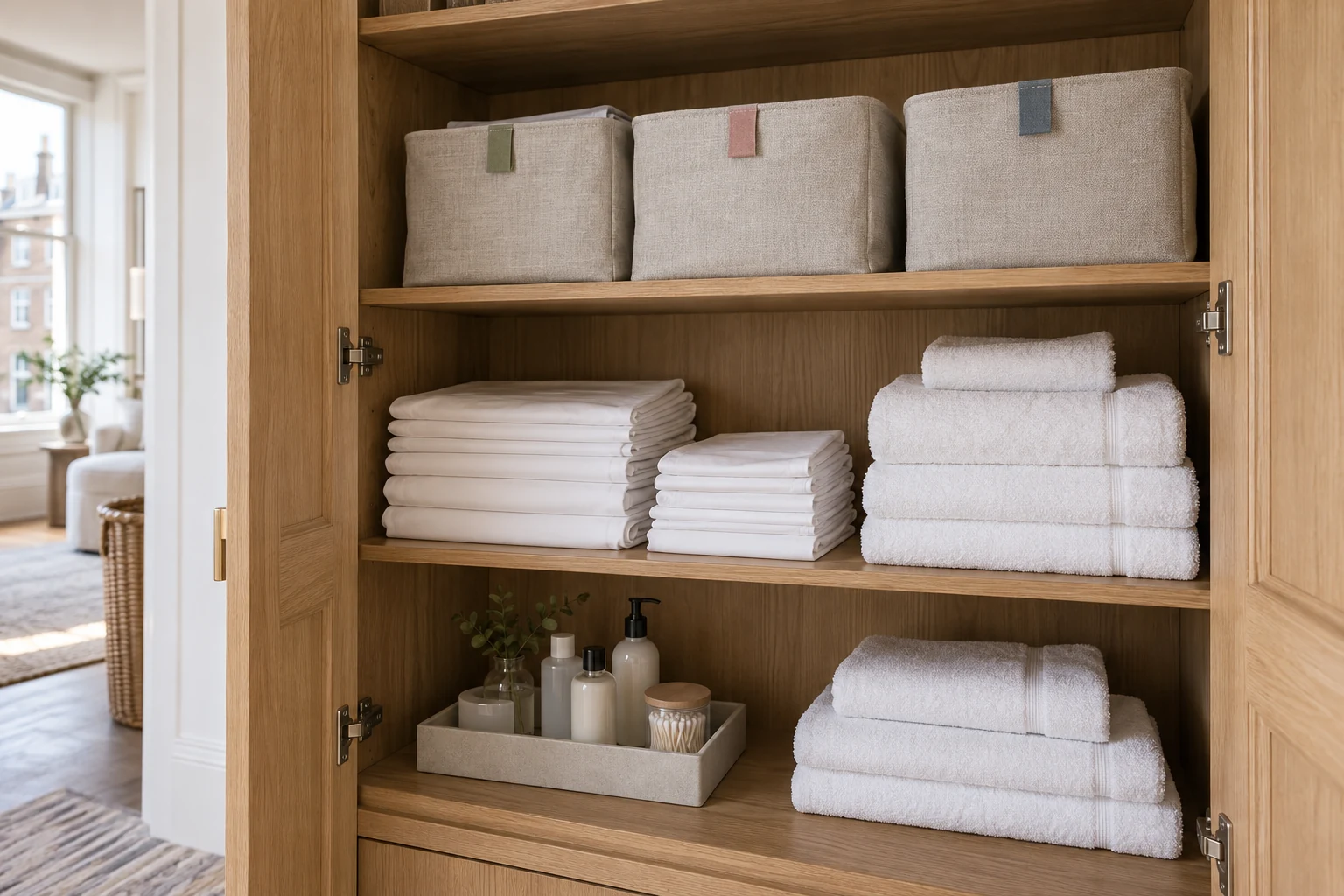
Set a reorder threshold for each essential. It should reflect expected use before the next replenishment, delivery lead time and a sensible reserve. Different properties may need different thresholds because occupancy, storage and booking patterns vary.
For example, if your chosen allowance is two toilet rolls per turnover and four turnovers are expected before the next delivery, the planned requirement is eight rolls plus your agreed reserve. That is a worked planning example, not a universal guest allowance. Apply the same approach to toiletries, bin bags and other consumables.
Agree who buys supplies, who checks quantities, who approves substitutions and how receipts are recorded. Avoid borrowing stock from another property without updating both records: otherwise today’s solution becomes tomorrow’s shortage.
With our Airbnb linen hire, hotel-quality linen is supplied neatly pressed and sealed, with accompanying hand and bath towels. Delivery and collection are included in the rates. Linen hire is available with our Airbnb turnover service, not as a standalone service, with a minimum order of two sets. Bed making forms part of the turnover clean. Confirm your bed sizes and requirements when requesting a quote.
Make completion reports useful enough to act on
Use a consistent set of completion photos, but match them to the property layout. Request clear room views and important details rather than a large collection of repetitive images. Keep guest documents, personal belongings and access codes out of photographs wherever possible.
Every report should answer three questions: Is the clean complete? Is anything missing or damaged? Is the property ready for the next arrival? These are not always the same answer. A clean apartment with a failed entry lock still needs attention before a guest arrives.
| Situation | Immediate report | Who takes the next decision? |
|---|---|---|
| Access unavailable | Property reference, time and the failed access step | Host or designated operations contact |
| Linen or supplies missing | Exact item, quantity and impact on setup | Person authorised to source or approve replacements |
| Unexpected extra cleaning | Photos and an estimate of additional work | Host approves scope, cost and any timing change |
| Maintenance or safety concern | Clear description; do not conceal it or attempt unauthorised repairs | Host arranges appropriate help and decides guest arrangements |
| Work complete, issue outstanding | Completed tasks and unresolved item shown separately | Named contact confirms whether the home can be released |
Agree the escalation route and response expectations in advance. If the usual contact is unavailable, the cleaner should know who comes next. An unanswered message must not silently become permission to skip a task or exceed an agreed budget.
Share the right information, not every account permission
Cleaners need the operational information required for their work, not necessarily access to pricing, payouts or all guest conversations. Where you use Airbnb co-host permissions, choose the level appropriate to the role and review it when responsibilities change. Airbnb sets out the available access levels in its co-host permissions guide.
Avoid sharing your main account password. Keep property notes accessible to authorised people, remove access when someone stops working with you and use an agreed secure route for entry details.
Review the pattern each week—not just the latest complaint
A short weekly review helps distinguish a one-off problem from a recurring process failure. Track accepted jobs, on-time readiness, re-cleans, missing stock and unresolved maintenance. Record the cause as well as the outcome: a delayed clean caused by a late checkout requires a different response from a missed assignment.
Compare each property with its own history before drawing conclusions about the team. A large home with several bathrooms should not be judged against a studio’s cleaning time. Use the review to adjust the brief, stock level or allotted work—not simply to demand that everyone works faster.
Questions hosts ask about cleaning several Airbnbs
Should all my properties use the same cleaning checklist?
Use one core standard with a property-specific supplement. Hygiene, presentation and reporting should be consistent, while access, bed setup, appliances, surfaces and stock quantities should reflect the actual home.
Can I manage a small portfolio with a spreadsheet?
Yes, provided there is one current version, restricted access where needed and a clear acknowledgement process. Consider dedicated software when repeated data entry or missed updates becomes a problem, but keep job ownership and exception handling explicit.
Can one cleaner cover several properties in a day?
Sometimes, but it depends on the workload, access times, travel and arrival deadlines. Confirm a workable allocation for the actual bookings rather than promising a fixed number of properties per cleaner.
What should I send when asking for a portfolio cleaning quote?
Send each property’s postcode, bedrooms, bathrooms, beds, typical occupancy, access arrangement and checkout/check-in times. Include expected turnover frequency, linen and restocking needs, and who can approve changes. Flag any dates when multiple homes need simultaneous changeovers.
Put a consistent plan behind every address
If you manage several London short lets, we can discuss a turnover plan with a shared standard and separate instructions for each home. Check our London service areas and send the full property postcodes so we can confirm availability and practical arrangements.
Request a multi-property cleaning quote or call 0204 603 4190. Tell us how the bookings overlap as well as how many properties you manage: that helps us discuss a realistic plan from the start.