
If an Airbnb guest leaves an extremely dirty property, pause before rushing into the clean. Check that entry is safe, record the condition, separate normal turnover work from exceptional cleaning, and agree a realistic recovery plan before promising the next guest a check-in time.
A difficult checkout creates two separate jobs: preparing the home again and deciding whether any additional costs should be raised with the guest. Keeping those jobs separate helps you avoid rushed cleaning, unsupported charges and a second unhappy booking.

The first steps after an unusually dirty checkout
- Confirm checkout and safe access. If someone is still inside, contact the host or booking coordinator rather than assuming the cleaner can enter.
- Record the untouched condition, where safe. Take room-wide photographs followed by close-ups of specific issues.
- Get a task-based assessment. Ask what extra work, equipment, drying time or specialist help is needed.
- Check the next arrival time. Set a decision point for updating the incoming guest if the property may not be ready.
- Approve the scope and cost. Keep the normal turnover and additional work separately identifiable.
Is it normal checkout mess or excessive cleaning?
Judge the work needed, not just how disappointing the first photograph looks. An unmade bed and breakfast dishes can look untidy without making a checkout exceptional. A small mark on delicate upholstery may look minor but need specialist assessment.
Airbnb’s ground rules for home guests distinguish standard cleaning from excessive or deep cleaning. They also say hosts cannot charge fees simply because a guest has not completed specific cleaning or checkout tasks. A missed instruction is not, by itself, a sound basis for an extra charge.
Routine turnover
Used bedding, ordinary bathroom use, everyday crumbs and normal household rubbish. Check your agreed cleaning scope before calling these extras.
Additional work
Unusual soiling, extensive food residue or a stain requiring treatment beyond the booked service. Describe the task and obtain an assessment; do not assume reimbursement.
Stop and escalate
Suspected hazardous waste, sharps, significant bodily-fluid contamination, sewage, pest activity or unsafe damage. Keep people away and arrange qualified advice or specialist assistance.
These are planning categories, not Airbnb claim decisions. The material, extent, cause and condition before the stay all matter. Our guide to regular cleaning versus Airbnb turnover cleaning explains the normal handover work in more detail.
Record what happened without turning it into a confrontation
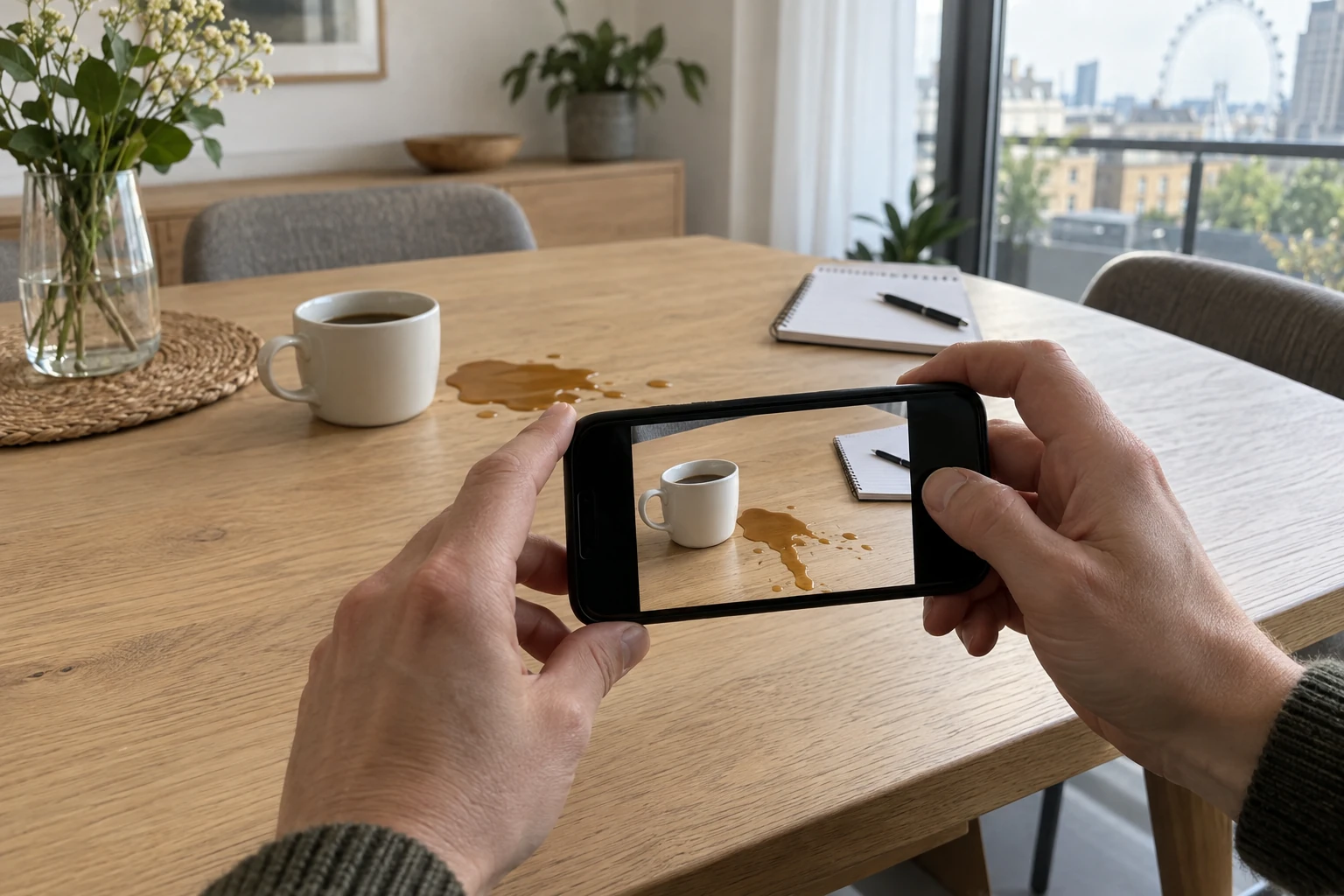
Create one clear incident record for the reservation. Capture the arrival time, rooms affected, observed condition and practical effect on the clean. Use neutral descriptions such as “sticky residue across the dining table and floor beneath it”, rather than conclusions about the guest’s character.
- Start wide, then move closer. Show which room and item each detail belongs to.
- Keep original photos and videos. Do not digitally exaggerate stains or substitute staged or generated images.
- Add a short cleaner’s account. Record what was seen, what was attempted and what remained unresolved.
- Compare with the previous handover. Existing dated photographs can help distinguish a new issue from pre-existing wear.
- Keep estimates, invoices and time records. Make any exceptional work distinguishable from the standard booked clean.
- Respect privacy. Avoid photographing identity documents, private correspondence or unrelated personal belongings. Share relevant evidence privately, not on social media.
Do not delay an urgent safety response to take pictures, and do not leave a worsening spill untreated solely to preserve evidence. Record what is safe to record and explain any immediate action taken. For lost possessions, follow your agreed lost-property process instead of treating everything left behind as rubbish.
Agree a recovery plan before the cleaner starts extra work
Ask for a realistic completion estimate based on tasks, not a promise to “do whatever is needed” within the original booking. Clarify whether the team can carry out the work and whether a separate specialist is required.
Give the cleaning provider a useful brief
- Property postcode, room count and booked cleaning window.
- The affected rooms and a small selection of clear photographs.
- Anything that may make entry or handling unsafe.
- The next guest’s expected arrival and who can authorise changes.
- Relevant surface-care instructions and any known pre-existing marks.
- Available spare bedding, towels and replacement guest essentials.
- Agreed access to the flat, supplies and authorised waste facilities.
For London apartments, the shared entrance and building procedures may affect how quickly extra help or equipment can reach the property. Confirm concierge arrangements, lifts, collection points and refuse rules. Do not leave bags or equipment in communal escape routes.
Separate cleaning, treatment and replacement
Cleaning a hard surface, treating upholstery and replacing a damaged item are different decisions. Do not assume every stain will come out, or that a damp carpet will be ready as soon as the treatment finishes. Ask about drying time, any restrictions on room use and what result can reasonably be expected.
Do not experiment with mixed cleaning products or unapproved treatments on delicate finishes. Leave hazardous contamination and specialist restoration to appropriately equipped providers. A normal turnover booking is not a promise of biohazard remediation.
What if the next guest is arriving today?
Work backwards from a genuinely guest-ready property, not simply the time the cleaner can leave. Allow for the clean itself, treatment or drying where relevant, fresh linen, restocking and a final inspection. Reassess once the team has seen the full job.
Illustrative example: a flat has a same-afternoon arrival, but a newly discovered sofa stain needs assessment and may remain damp after treatment. Finishing the kitchen quickly does not resolve that issue. The host needs to decide whether the whole booked space can be ready, discuss options with the guest and contact Airbnb if the reservation is affected. This is a planning example, not a guaranteed turnaround time.
Give an early factual update if readiness is uncertain. Do not quietly reduce the cleaning standard, mask an unresolved odour with fragrance or promise a revised arrival time that nobody has confirmed. If safe, suitable accommodation cannot be provided, contact Airbnb promptly about the available options rather than assuming cancellation is penalty-free.
Can you recover extra cleaning costs from the guest?
Possibly, but an untidy checkout does not automatically qualify. Airbnb’s Host damage protection guidance describes certain eligible unexpected cleaning costs, such as guest-caused stain removal, pet accidents and smoke odour removal. Ordinary checkout cleaning is excluded. Eligibility, evidence and terms apply; reimbursement is not guaranteed.
The guidance says to request reimbursement through the Resolution Center within 14 days of checkout. It also gives a separate warning about contacting Support and submitting documentation within 14 days of the damage or loss. Act promptly and check the current instructions for your reservation rather than waiting for the last day. Host damage protection is not insurance.
Keep your request factual and based on documented additional costs. Separate the usual cleaning charge from the extra work, and explain any difference between the initial estimate and final invoice. Do not present an arbitrary penalty as a cleaning cost or charge twice for the same task.
Two calm message templates for a difficult checkout
Message to the departing guest
Hi [name], during the checkout inspection today we found [specific issue] in [room]. We have recorded the condition and are checking what additional work is needed. Could you let us know what happened? We will share the relevant photographs and any itemised additional cost through Airbnb once assessed. Thank you.
Update to an incoming guest when readiness is uncertain
Hi [name], we identified an unexpected issue while preparing the property and are assessing the work needed. Your planned check-in is [time]. I will update you by [confirmed update time] with the situation and any options if your arrival is affected. I am sorry for the uncertainty and will keep you informed.
Only include facts you have checked. Keep reservation-related communication on the platform, avoid public accusations and do not make payment or a refund conditional on the guest leaving a particular review.
Before you mark the property ready again
Use a room-by-room inspection, not just a photograph of the most improved area. Our Airbnb cleaning checklist can support the normal reset; add a specific recheck for each issue recorded at checkout.
- The agreed additional work has been completed and checked.
- Any remaining damage or specialist work has been reported to the host.
- Treated areas are ready for use in accordance with the provider’s instructions.
- Fresh bedding and towels are in place, and the bathroom and kitchen are guest-ready.
- Waste has been removed through the appropriate arrangements and essentials replenished.
- Keys, access arrangements and final completion photos have been checked.
- The host has confirmed any necessary guest update; the next arrival is not relying on an outdated promise.
Make the next difficult checkout easier to manage
Keep clear checkout instructions, a documented baseline for each property and a named person who can authorise additional work. Agree in advance how your cleaner reports unusual conditions and what happens if the booked time is insufficient. A small reserve of clean bedding and guest essentials helps avoid turning one problem into several.
Review the cause after the incident: was the scope too narrow, a surface already damaged, a waste instruction unclear or a genuine exceptional checkout? Improve the process without adding an unreasonable chore list for every future guest. See our guide to guest cleaning expectations before checkout for the distinction between leaving a property reasonably tidy and doing the host’s turnover work.
Need help assessing the next clean?
Send Airbnb Cleaners London your postcode, property size, checkout condition and next arrival time. We can discuss the cleaning scope and availability before you commit. Additional work is subject to assessment and an agreed quote; specialist treatment and same-day recovery are not guaranteed.
Request a cleaning quote · Explore our turnover cleaning service
Please do not include live access codes or private guest information in the enquiry form.
Frequently asked questions
Does paying a cleaning fee mean guests can leave any mess?
No. Airbnb expects guests to respect the property. However, ordinary cleaning and exceptional additional work should not be treated as the same thing. Assess and document the actual condition before raising a concern.
Should I wait for the guest to reply before arranging cleaning?
Record the condition where safe, then coordinate the recovery work. Do not leave the property unusable simply while waiting for a reply. Keep the operational plan and any reimbursement discussion separate.
Can the cleaner decide what to charge the guest?
The cleaner can describe the work and provide an estimate or invoice. The host handles the reservation, guest communication and any platform request. Extra work should be authorised under the arrangement agreed with the cleaning provider.
Can you guarantee a badly soiled property will be ready the same day?
No. Readiness depends on the condition, available staff, equipment, treatment and drying needs. Confirm the scope and timing first, particularly if the property needs specialist help.
Should I post photos of the mess in a public review?
Keep incident evidence in the appropriate private reporting channels. Write factual feedback through the platform’s review process and avoid sharing identifying guest information publicly.